

Human Growth Hormone: Dietary Supplements and Prescription Drugs
- human growth hormone
- HGH
- hGH
- r-hGH
- growth hormone, human
- growth hormone, recombinant human
- somatropin
- somatotrophin
- rh-GH
- synthetic HGH
 Prohibited
What is human growth hormone?
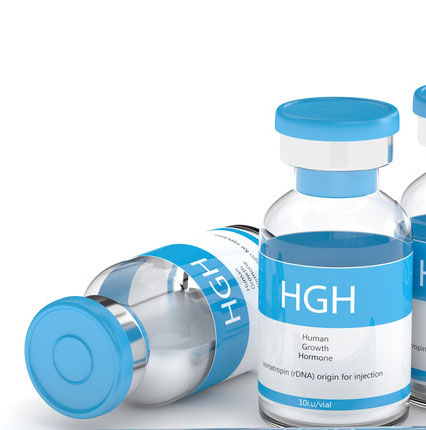
Human growth hormone (HGH) is a peptide hormone produced naturally by the pituitary gland that promotes growth in children and regulates metabolism, body composition, and tissue repair in adults. It can also be synthetically produced in a laboratory. Commonly known as somatropin, this synthetic version is the active ingredient in several injectable prescription medications approved by the Food and Drug Administration (FDA).
What are the legal uses of HGH?
HGH prescription medications are approved by FDA to treat specific medical conditions, such as:
- Growth failure or short stature in children caused by specific genetic disorders or chronic medical conditions
- Adult-onset growth hormone deficiency
- Short bowel syndrome that requires specialized nutritional support
- Muscle wasting and body fat changes caused by HIV
Service Members who use synthetic HGH can only do so with a current prescription, under the supervision of a licensed physician, and must only use an FDA-approved medication.
Can HGH be used as an ingredient in health and wellness products?
- HGH is frequently misused or abused to reduce body fat, build muscle, or for other performance-enhancing purposes. Use of HGH for anti-aging, athletic performance, and bodybuilding purposes is considered illegal use.
- HGH is an illegal dietary supplement ingredient. According to FDA, “[...] HGH is excluded from the definition of a dietary supplement under section 201(ff)(3)(B) of the FD&C Act, 21 U.S.C. 321 (ff)(3)(B). Therefore, any product containing HGH cannot be a dietary supplement.”
- HGH, its analogs and fragments, are listed in Section 2 (Peptide Hormones, Growth Factors, Related Substances, and Mimetics) of the World Anti-Doping Agency (WADA) Prohibited List.
- HGH, as well as its analogs and fragments, are included on the DoD Prohibited Dietary Supplement Ingredients List and prohibited for use by Service Members.
Safety and Considerations
While HGH is a beneficial treatment for specific medical conditions, its use carries serious risks. Known adverse effects associated with HGH prescription medications include:
- Rash
- Irritation at the injection site
- Headache
- Obstructive sleep apnea
- Swelling of arms and legs
- Severe nerve, muscle, joint, or limb pain
- High blood sugar and an increased risk of type 2 diabetes
- Damage to certain growth plates in children
- Inflammation of the pancreas (pancreatitis)
- Increased pressure in the brain (idiopathic intracranial hypertension)
According to FDA Import Alert 66-71, there are significant concerns about counterfeit and unapproved HGH products in the marketplace. HGH products purchased online or from unauthorized foreign suppliers do not meet the same U.S. safety standards, leaving consumers at risk of potentially dangerous side effects caused by incorrect dosages, undisclosed fillers, chemical impurities, or microbial contamination.
HGH prescription medications should not be confused with over-the-counter dietary supplements marketed as “HGH boosters,” “growth hormone activators,” or “growth peptides.” The labels of these products often list a variety of dietary supplement ingredients, not actual HGH.
- However, without laboratory analysis, there is no way to know for certain whether dietary supplements that mention HGH in their name or marketing language do or do not contain HGH. Service Members can submit questions about specific dietary supplement ingredients or products through the OPSS Ask the Expert portal.
Bottom Line
- Synthetic HGH is an FDA-approved prescription medication used to treat specific medical conditions.
- As a prescription drug, HGH should only be used with a current prescription under the supervision of a qualified healthcare provider.
- Use of HGH as a dietary supplement ingredient, or for bodybuilding, anti-aging, and performance-enhancing purposes is illegal.
- Using non-prescribed or unapproved HGH products poses significant health and readiness risks.
Posted 12 November 2026

